
Η ΕΥΡΩΠΑΪΚΗ ΙΣΤΟΡΙΑ ΤΗΣ ΚΥΠΡΟΥ
____________________________
Η Κύπρος, αν και γεωγραφικά ανήκει στην Ανατολική Μεσόγειο, υπήρξε διαχρονικά ένα νησί-γέφυρα μεταξύ Ανατολής και Δύσης. Η στρατηγική της θέση την κατέστησε σημαντικό πολιτικό, εμπορικό και πολιτισμικό κέντρο, με έντονη ευρωπαϊκή παρουσία, ιδιαίτερα κατά τη μεσαιωνική και αναγεννησιακή περίοδο.
H Κύπρος έχει βαθιές ρίζες στην Ευρώπη. Από την αρχαιότητα, η νησιωτική της ταυτότητα συνδέθηκε με τον ελληνικό πολιτισμό, τις τέχνες και τη φιλοσοφία της Μεσογείου. Αργότερα, κατά τη διάρκεια της Φραγκοκρατίας (1192–1489) και της Ενετοκρατίας (1489–1571), η Κύπρος ενσωμάτωσε πολλά στοιχεία της δυτικής ευρωπαϊκής κουλτούρας – από την αρχιτεκτονική και την τέχνη μέχρι το διοικητικό της σύστημα.
Οι κυριότερες ευρωπαϊκές δυνάμεις που άφησαν βαθύ αποτύπωμα στην ιστορία της Κύπρου ήταν οι Λουζινιανοί και οι Ενετοί.
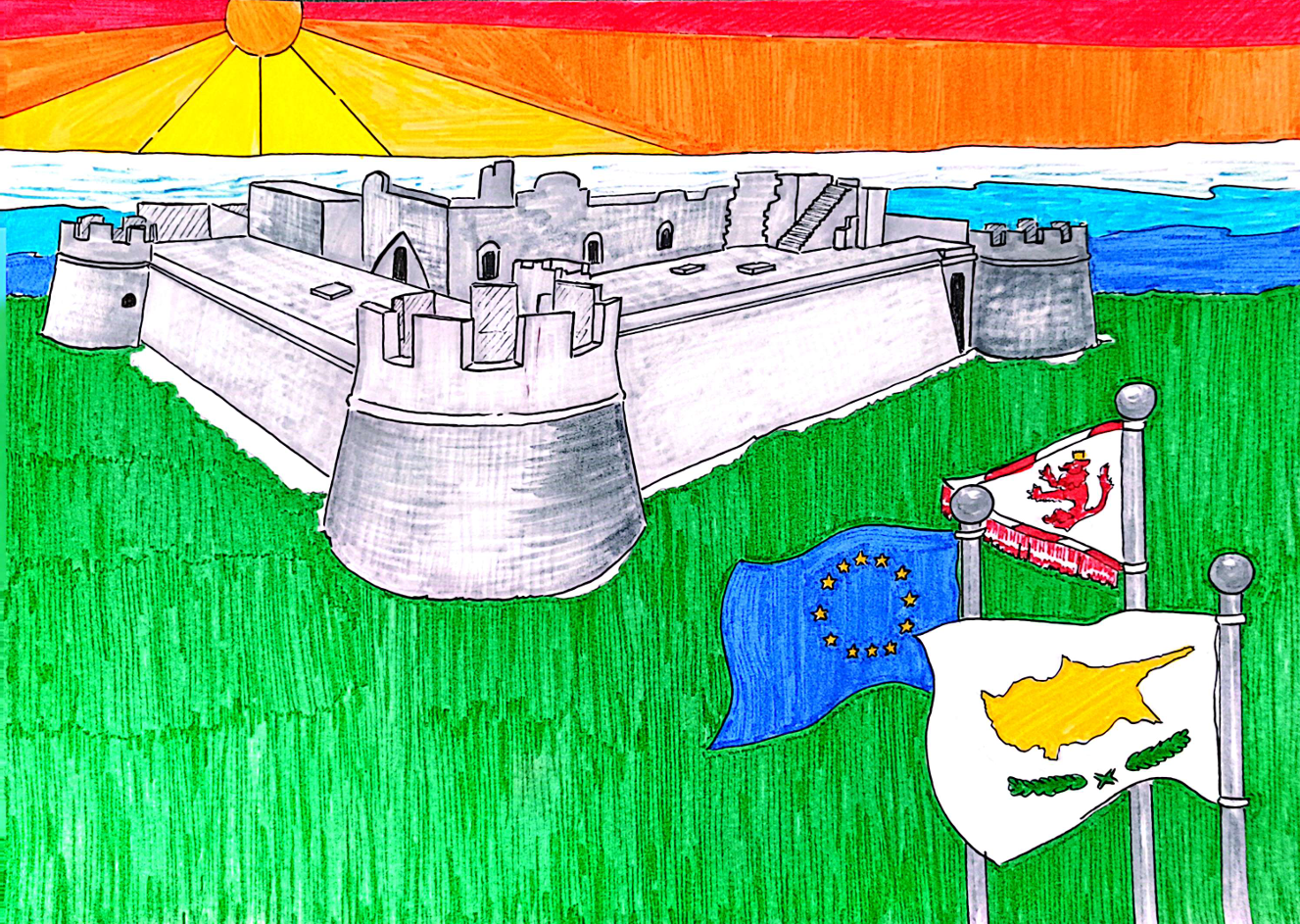
Η περίοδος της Φραγκοκρατίας ξεκινά το 1192, όταν η Κύπρος πέρασε στην κυριαρχία της γαλλικής δυναστείας των Λουζινιανών, μετά τις Σταυροφορίες. Κατά τη διάρκεια αυτής της περιόδου, το νησί εντάχθηκε ενεργά στον ευρωπαϊκό μεσαιωνικό κόσμο. Οι Λουζινιανοί εισήγαγαν το φεουδαρχικό σύστημα, καθώς και ευρωπαϊκούς διοικητικούς και νομικούς θεσμούς, οι οποίοι άλλαξαν σημαντικά την κοινωνική και πολιτική οργάνωση της Κύπρου. Ιδιαίτερη σημασία είχε και η πολιτισμική επίδραση της Δύσης. Κατασκευάστηκαν μεγαλοπρεπείς γοτθικοί καθεδρικοί ναοί, μοναστήρια, παλάτια και κάστρα, εμπνευσμένα από τη δυτικοευρωπαϊκή αρχιτεκτονική. Παραδείγματα αποτελούν οι καθεδρικοί ναοί της Αγίας Σοφίας στη Λευκωσία και του Αγίου Νικολάου στην Αμμόχωστο, καθώς και τα κάστρα της Κερύνειας, του Αγίου Ιλαρίωνα και του Κολοσσίου. Οι πόλεις αναπτύχθηκαν σύμφωνα με δυτικά πρότυπα και η Κύπρος εξελίχθηκε σε σημαντικό εμπορικό και διοικητικό κέντρο της Ανατολικής Μεσογείου.
Το 1489, μετά την παραίτηση της τελευταίας βασίλισσας Αικατερίνης Κορνάρο, η Κύπρος πέρασε στην κυριαρχία της Δημοκρατίας της Βενετίας. Η περίοδος της Ενετοκρατίας (1489–1571) χαρακτηρίστηκε από έντονη στρατιωτική και τεχνική δραστηριότητα, καθώς οι Ενετοί αναγνώριζαν τη στρατηγική σημασία του νησιού για τον έλεγχο των θαλάσσιων εμπορικών δρόμων. Οι Βενετοί προχώρησαν σε εκτεταμένα έργα οχύρωσης, εφαρμόζοντας τις πιο σύγχρονες μεθόδους της εποχής. Τα ενετικά τείχη της Λευκωσίας και της Αμμοχώστου, με τους κυκλικούς προμαχώνες και τις βαθιές τάφρους, αποτελούν χαρακτηριστικά δείγματα ιταλικής στρατιωτικής αρχιτεκτονικής της Αναγέννησης.
Παράλληλα, η αστική ζωή επηρεάστηκε από τις αναγεννησιακές ιδέες, με ανάπτυξη του εμπορίου, της ναυτιλίας και των τεχνών.
Σήμερα, τα μνημεία που άφησαν πίσω τους οι Λουζινιανοί και οι Ενετοί αποτελούν ζωντανά στοιχεία της ευρωπαϊκής πολιτιστικής κληρονομιάς της Κύπρου. Μεσαιωνικά κάστρα, γοτθικοί ναοί, ενετικά τείχη, πύλες και αναγεννησιακά κτήρια μαρτυρούν τη μακρόχρονη ευρωπαϊκή παρουσία στο νησί.
Αυτή η ιστορική κληρονομιά συνυπάρχει με τις ανατολικές και μεσογειακές επιρροές, διαμορφώνοντας τη μοναδική πολιτισμική ταυτότητα της Κύπρου ως ευρωπαϊκού κράτους με βαθιές ιστορικές ρίζες. Η επίδραση των ευρωπαϊκών λαών φαίνεται επίσης στη συμπεριφορική κουλτούρα: οι Κύπριοι συχνά συνδυάζουν την ανατολίτικη φιλοξενία με τον ευρωπαϊκό τρόπο επικοινωνίας και οργάνωσης στην καθημερινή ζωή.
Αν θέλεις να δεις αυτά τα «ευρωπαϊκά ίχνη» με τα δικά σου μάτια, δοκίμασε αυτή την περίπατο 1–2 ωρών στην Εντός Τειχών Παλιά Πόλη:
Εκκίνηση στα Ενετικά Τείχη
Ξεκίνησε από την περιοχή γύρω από τα τείχη και περπάτησε κατά μήκος τους, παρατηρώντας τους προμαχώνες — μια ευθεία σύνδεση με την ευρωπαϊκή στρατιωτική αρχιτεκτονική του 16ου αιώνα.
Πλατεία & Εκκλησία Φανερωμένης
Στάση στην πλατεία για μια πρώτη μικρή «γεύση» της ιστορικής εντός των τειχών ζωής και της αρχιτεκτονικής που συνδυάζει ανατολικές και δυτικές επιρροές.
Καθεδρικός του Αγίου Ιωάννη
Μια κλασική ευρωπαϊκή εκκλησία με πλούσιο εσωτερικό διάκοσμο που αξίζει να δεις.
Στα σοκάκια της Laiki Geitonia
Περπάτησε στα γραφικά δρομάκια αυτής της αναπαλαιωμένης περιοχής — τα σπίτια και τα μαγαζάκια θυμίζουν μια μικρή, ζωντανή «ευρωπαϊκή γειτονιά».
Καφές ή μεζές σε τοπικό καφενείο
Τέλος, κάτσε σε μια καφετέρια ή καντίνα για να απολαύσεις το «καφεδάκι» σου με θέα τα στενά. Η ίδια η λέξη καντίνα σου θυμίζει την ευρωπαϊκή διαδρομή που φέρνει η καθημερινότητά μας.
The European History of Cyprus
___________________
Cyprus, although geographically located in the Eastern Mediterranean, has historically served as a bridge between East and West. Its strategic position made it an important political, commercial, and cultural center, with a strong European presence, particularly during the medieval and Renaissance periods.
Cyprus has deep roots in Europe. Since antiquity, the island’s identity has been connected to Greek culture, Mediterranean arts, and philosophy. Later, during the Frankish period (1192–1489) and the Venetian period (1489–1571), Cyprus incorporated many elements of Western European culture — from architecture and art to administrative systems.
The main European powers that left a lasting mark on Cyprus were the Lusignans and the Venetians.
The Frankish period began in 1192, when Cyprus came under the rule of the French Lusignan dynasty after the Crusades. During this period, the island became actively integrated into the European medieval world. The Lusignans introduced the feudal system as well as European administrative and legal institutions, significantly transforming the social and political organization of Cyprus. Western cultural influence was also prominent. Majestic Gothic cathedrals, monasteries, palaces, and castles were constructed, inspired by Western European architecture. Notable examples include the Cathedral of Saint Sophia in Nicosia, the Cathedral of Saint Nicholas in Famagusta, and the castles of Kyrenia, St. Hilarion, and Kolossi. Cities were developed according to Western models, and Cyprus evolved into a major commercial and administrative center in the Eastern Mediterranean.
In 1489, after the abdication of the last queen, Catherine Cornaro, Cyprus came under the rule of the Republic of Venice. The Venetian period (1489–1571) was marked by intense military and technical activity, as the Venetians recognized the island’s strategic importance for controlling maritime trade routes. They carried out extensive fortification works using the most advanced methods of the time. The Venetian walls of Nicosia and Famagusta, with their circular bastions and deep moats, are characteristic examples of Italian Renaissance military architecture.
At the same time, urban life was influenced by Renaissance ideas, with the growth of commerce, shipping, and the arts.
Today, the monuments left by the Lusignans and Venetians are living elements of Cyprus’s European cultural heritage. Medieval castles, Gothic cathedrals, Venetian walls, gates, and Renaissance buildings testify to the island’s long-standing European presence.
This historical legacy coexists with Eastern and Mediterranean influences, shaping Cyprus’s unique cultural identity as a European country with deep historical roots. European influence is also evident in social behavior: Cypriots often combine Eastern hospitality with European modes of communication and organization in daily life.
Suggested Walking Tour – Walled City of Nicosia (1–2 hours)
Start at the Venetian Walls
Walk along the walls and observe the bastions — a direct connection to 16th-century European military architecture.
Faneromeni Square & Church
Stop at the square to get a glimpse of historic life within the walls, with architecture blending Eastern and Western influences.
Cathedral of Saint John
A classic European-style church with richly decorated interiors worth exploring.
Laiki Geitonia
Stroll through the narrow streets of this renovated area — houses and shops evoke a small, lively “European neighborhood.”
Coffee or meze at a local café
End your walk at a café or canteen to enjoy a coffee with a view of the streets. Even the word canteen reflects the European cultural influence embedded in everyday life.
L’Histoire Européenne de Chypre
___________________
Chypre, bien que géographiquement située en Méditerranée orientale, a toujours servi de pont entre l’Orient et l’Occident. Sa position stratégique en a fait un centre politique, commercial et culturel important, avec une forte présence européenne, particulièrement pendant les périodes médiévale et de la Renaissance.
Chypre possède de profondes racines européennes. Depuis l’Antiquité, l’identité insulaire est liée à la culture grecque, aux arts méditerranéens et à la philosophie. Plus tard, durant la période franque (1192–1489) et la période vénitienne (1489–1571), Chypre a intégré de nombreux éléments de la culture européenne occidentale — de l’architecture et de l’art aux systèmes administratifs.
Les principales puissances européennes ayant laissé une empreinte durable sur Chypre furent les Lusignans et les Vénitiens.
La période franque commence en 1192, lorsque Chypre passe sous la domination de la dynastie française des Lusignans, après les Croisades. L’île s’intègre activement au monde médiéval européen. Les Lusignans introduisent le système féodal ainsi que des institutions administratives et juridiques européennes, transformant profondément l’organisation sociale et politique. L’influence culturelle occidentale est également notable : de majestueuses cathédrales gothiques, des monastères, des palais et des châteaux furent construits, inspirés par l’architecture européenne occidentale. Parmi les exemples notables figurent la Cathédrale Sainte-Sophie à Nicosie, la Cathédrale Saint-Nicolas à Famagouste, ainsi que les châteaux de Kyrenia, Saint-Hilarion et Kolossi. Les villes se développent selon des modèles occidentaux et Chypre devient un centre commercial et administratif majeur de la Méditerranée orientale.
En 1489, après l’abdication de la dernière reine, Catherine Cornaro, Chypre passe sous la domination de la République de Venise. La période vénitienne (1489–1571) est marquée par une intense activité militaire et technique, les Vénitiens reconnaissant l’importance stratégique de l’île pour le contrôle des routes commerciales maritimes. D’importants travaux de fortification sont réalisés avec les méthodes les plus avancées de l’époque. Les murailles vénitiennes de Nicosie et de Famagouste, avec leurs bastions circulaires et leurs douves profondes, sont des exemples typiques de l’architecture militaire italienne de la Renaissance.
La vie urbaine s’influence également des idées de la Renaissance, avec le développement du commerce, de la navigation et des arts.
Aujourd’hui, les monuments laissés par les Lusignans et les Vénitiens sont des éléments vivants du patrimoine culturel européen de Chypre. Châteaux médiévaux, cathédrales gothiques, murailles vénitiennes, portes et bâtiments de la Renaissance témoignent de la présence européenne durable sur l’île.
Cet héritage historique coexiste avec les influences orientales et méditerranéennes, façonnant l’identité culturelle unique de Chypre comme pays européen aux racines profondes. L’influence européenne se retrouve également dans la culture comportementale : les Chypriotes combinent souvent l’hospitalité orientale avec des modes de communication et d’organisation européens dans la vie quotidienne.
Proposition de visite à pied – Ville fortifiée de Nicosie (1–2 heures)
Départ depuis les murailles vénitiennes
Promenez-vous le long des murailles et observez les bastions — un lien direct avec l’architecture militaire européenne du XVIe siècle.
Place et église de Faneromeni
Pause sur la place pour découvrir la vie historique à l’intérieur des murailles et l’architecture mêlant influences orientales et occidentales.
Cathédrale Saint-Jean
Église de style européen classique avec un intérieur richement décoré.
Quartier Laiki Geitonia
Balade dans les rues étroites de ce quartier rénové — maisons et commerces évoquent un petit quartier européen vivant.
Café ou meze dans un café local
Terminez la visite dans un café ou une cantine pour savourer un café avec vue sur les ruelles. Le mot cantine reflète l’influence européenne encore présente dans le quotidien.
 |